
Commercial window film.
A commercial job is rarely decided by the film. It is decided by whether the work can happen without closing the floor, whether one specification will hold across forty building faces, and whether the glass is a comfort problem, a security problem or both. That is what this page is about.
Switch privacy without pretending every dynamic glass is the same.
For suitable existing partitions, retrofit PDLC smart film can avoid replacing the glass. For new construction or replacement openings, smart glass integrates the switching layer into a fabricated assembly. Electrochromic and SPD solar-tint systems are separate technologies and are only proposed when specifically confirmed.
Glass assessment
Identify glass make-up, coatings, safety requirements, frame details and movable-panel clearances.
Controls assessment
Plan zones, power, controller access, cable exits and coordination with the project electrician.
Installation assessment
Price fabrication, freight, lifts, occupied-space protection, trim and finish restoration explicitly.
What the glass is usually doing wrong.
Six building types, six different failure modes. The linked service page carries the product detail.
Offices and professional suites
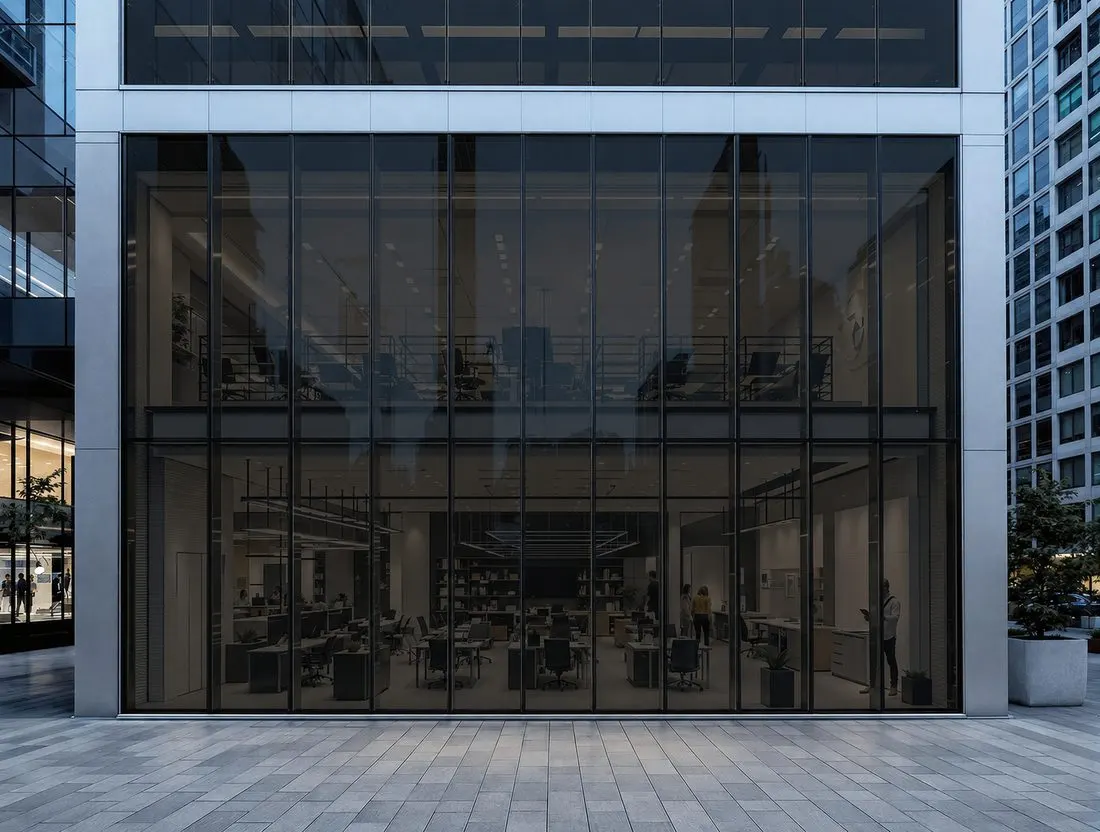
Large building faces, open floor plans and a thermostat that cannot satisfy a sunny side and a shaded side at once. Staff complaints track the sun, not the setpoint.
Solar control film on the loaded building faces, so the HVAC stops fighting the glass.
Retail and street-level frontage
The glass is the shopfront, so it cannot be darkened much, and it is also the most accessible pane in the building. Merchandise in the window fades quickly.
Clear UV or light solar film to protect stock, with security film where the glass is at risk.
Healthcare, dental and clinical
Exam rooms, reception and interior partitions need privacy that does not turn a corridor into a dark box, and patients notice glare from a chair.
Frosted and decorative film for privacy, with solar control on the waiting-room glass.
Multi-family and property management
Tenants report hot units and faded finishes, and the owner is replacing carpet and paint more often than the schedule assumed.
A single specification applied building-wide, so units perform and look consistent.
Schools, government and public buildings
Glass near entries and ground-floor classrooms is both a solar and a safety question, and any work has to fit around occupancy.
Safety and security film with attachment considered at the frame, plus solar control where needed.
Warehouse, industrial and distribution
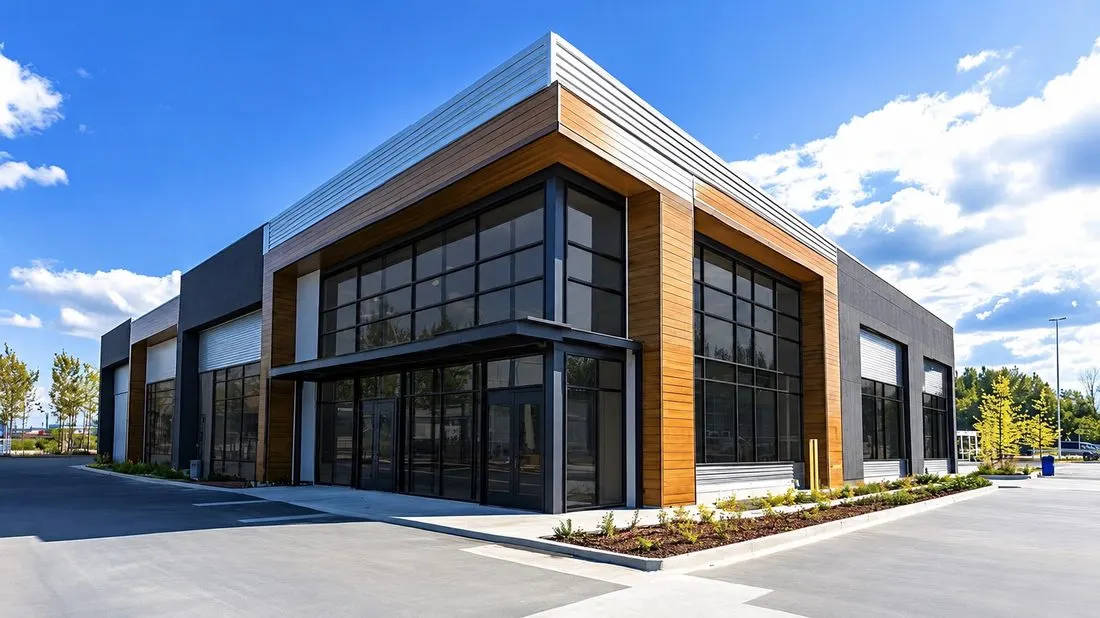
Modest glass carrying a heavy load — a west-facing office in a metal building gets uncomfortable fast — plus yard-facing panes exposed to weather and traffic.
Targeted solar control on the bad building faces, security film on exposed ground-floor glazing.
Scheduling is the hard part, not the film
On a commercial building the specification is usually settled in an hour. What takes planning is sequencing: which building faces come first, how a tenant is notified, whether a floor is done at a weekend, how a lift or a swing stage gets scheduled, and how the work is staged so a reception area is never mid-install during business hours. We walk the building, agree the phasing in writing, and work to it.
For multi-site owners the value is consistency. One specification per glass type means every location looks the same from the street and performs the same on the energy report, and the documentation lands in one place rather than accumulating across four contractors.
Where the money actually comes from
Film is an envelope upgrade with no glass replacement, no permit and effectively no downtime, which is why it tends to pay back faster than anything else available to an existing building. Solar heat stopped at the window is heat the cooling plant never has to move, and the same install reduces the fading that drives carpet, paint and merchandise replacement cycles.
Security is the other half. Glass is the least resistant part of most commercial envelopes, and a filmed pane that remains better retained can make a quick reach-through more difficult. Actual delay depends on the complete glazing and attachment system, so it is a risk-reduction measure rather than a time guarantee.
Figures are industry-typical ranges for solar and Low-E window film, not a guarantee for your specific home. Actual savings depend on window orientation, existing glass, and local energy rates.
Break-in figures reflect commonly cited FBI-sourced industry statistics on forced-entry burglary and time-to-deter.
Working on your own house instead?
The homeowner version of this page is organized room by room, with the same films and the same warranty: residential window film.
Commercial FAQs.
Can you install without shutting our business down?
How is a commercial job quoted?
Will security film stop a break-in?
Does film help with energy costs on an existing building?
Can film carry our branding or window graphics?
Is the warranty different for commercial work?
Can you install without shutting down our business?
Do you handle multiple locations?
Request a commercial walk-through
Free, on-site, and quoted on the spot. There is a $500 minimum per job.
Utah buildings, front and back.
Ready for a free on-site quote?
A local rep measures every window that matters and quotes on the spot. No fee, no pressure, no obligation.