
Residential window film.
Almost every call we take starts with a room, not a product: the living room nobody sits in after three, the floor going pale in a stripe, the bathroom window with a blind that never opens. This page is organized the same way — by the room and the problem, with the film chosen last.
Existing glass or a new glazing assembly.
Sleek supplies and installs retrofit smart film on suitable existing glass and smart glass for new or replacement openings. Bathrooms, interior partitions and feature windows still need a glass, wiring, lighting and access assessment.
Retrofit smart film
Keep suitable existing glass and add switchable clearer/frosted privacy behavior.
Assess smart film →New or replacement smart glass
Coordinate a fabricated assembly with the frame, controls and installation scope.
Assess smart glass →Three buyer checks
Nighttime privacy: reflective ordinary film depends on the brighter side and may not protect privacy when interior lights are on. Frosted or switchable privacy products behave differently, but switchable privacy is still not blackout.
Low-E glass: coating location and glass construction must be identified before any film is approved; Low-E is not an automatic yes or no.
Security: privacy products do not establish forced-entry performance. Security film and attachment systems require a separate specification.
Where film earns its place in a house.
Six rooms, six different reasons. If you recognize yours, the linked service page has the product detail.
Living room and great room
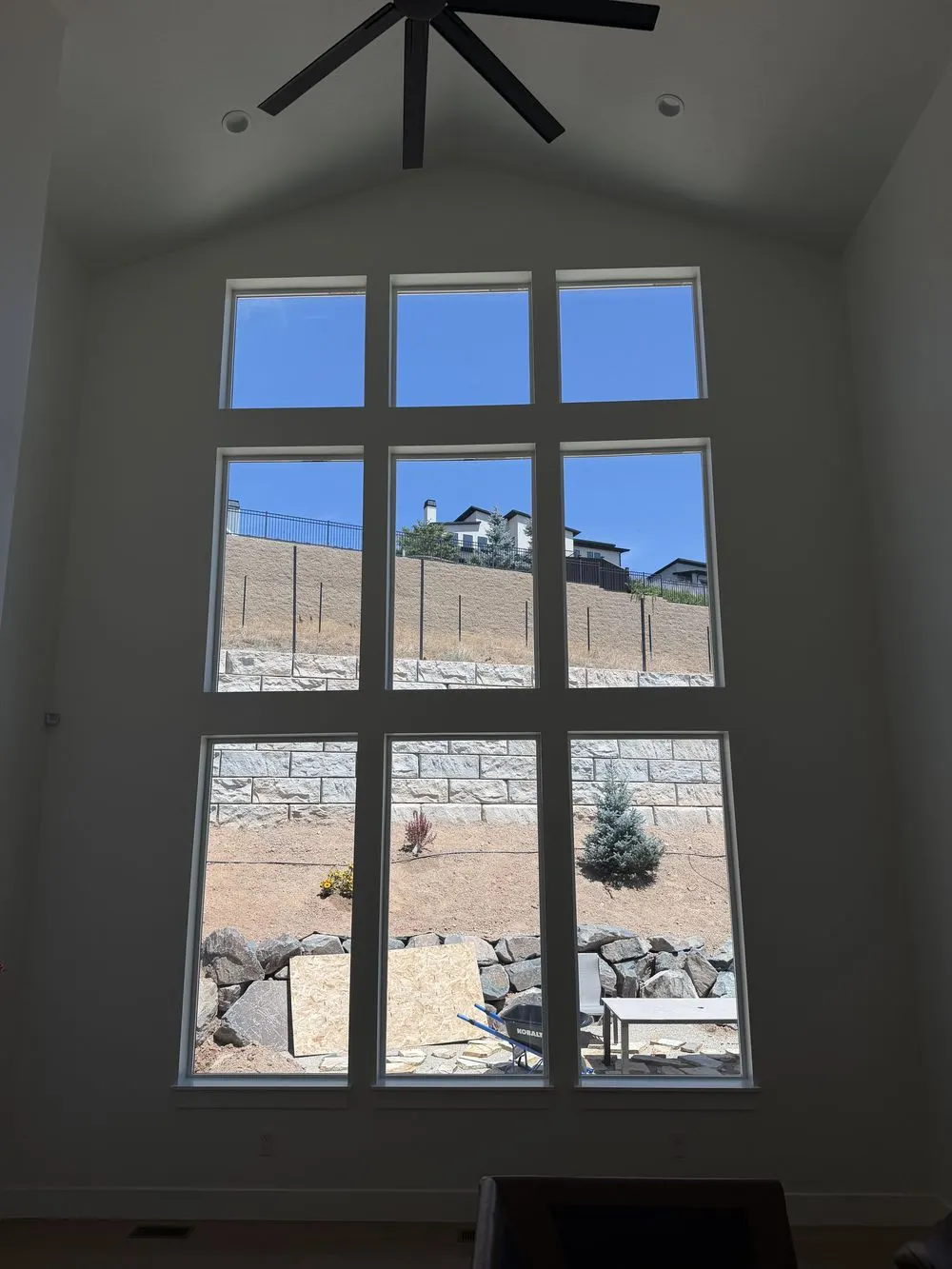
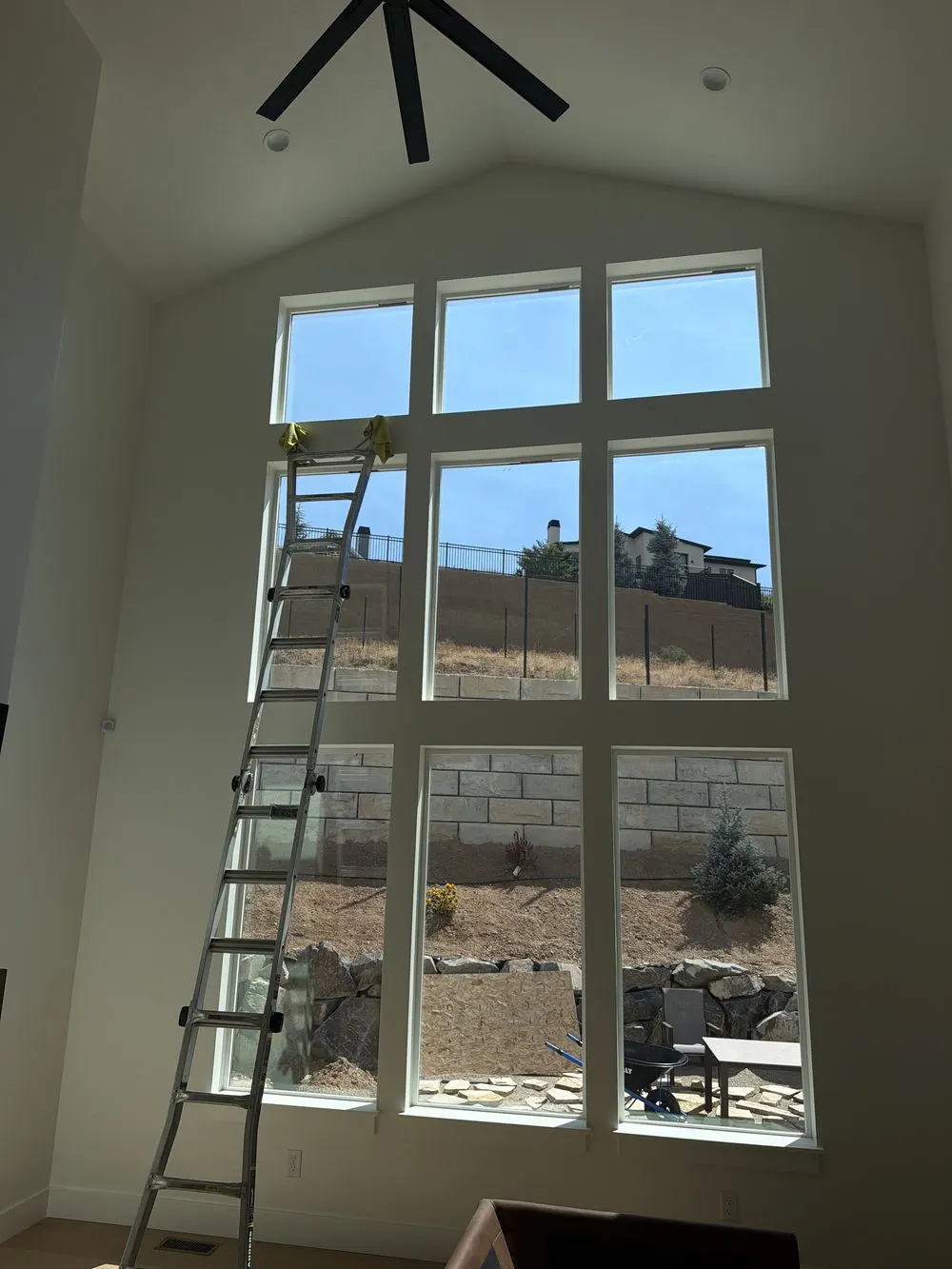
The biggest glass in the house, usually facing west or south, often two stories tall with nothing shading it. It is the room people stop using in the afternoon.
Spectrally selective heat control film — heat and glare out, the view and most of the daylight left alone.
Kitchen and breakfast nook
East and south-east glass makes this the morning hot spot, and it is where a blind is least practical because you are working under the window.
A lighter heat control film so the room stays bright while the morning spike flattens out.
Bedrooms
Late sun on a west bedroom keeps it warm past bedtime, and ground-floor bedrooms on a tight lot are the ones people keep the blinds shut in all year.
Heat control on upper floors; a privacy or frosted film downstairs where the blinds never open anyway.
Floors, rugs, art and furniture
Fading is cumulative and nobody notices it until a rug is moved. Snow can reflect additional UV toward the glass in winter.
Clear UV film blocks 99% of ultraviolet with no visible change to the glass at all.
Bathrooms, entries and stairwells
Glass that has to let light in and stop anyone seeing through it — day and night, which a tinted film cannot do once the lights are on inside.
Frosted and decorative film: permanently opaque, no blinds to clean, still bright.
Ground-floor and patio glass
Large accessible panes are the way most break-ins happen, and a single-pane door is the least resistant thing in the house.
Safety and security film bonds the pane so it holds together in the frame instead of opening on the first strike.
What Utah does to residential glass
Utah homes experience direct sun and seasonal snow reflection, which can add UV and glare at the glass. Film selection should account for each room’s exposure, existing windows and the light level you want to preserve.
Then there is orientation, which is why we will not quote a house over the phone. West-facing glass under an unshaded horizon is a completely different job from east-bench glass that falls into canyon shadow by four, and lake-adjacent windows in Davis and Utah counties pick up reflected glare off open water on top of the direct sun. Housing stock closes it out: original single-pane sash wants a Low-E answer, 1970s aluminum sliders want heat rejection specified carefully, and 2020s builder glass usually needs glare control more than anything else.
How the quote works
A rep comes to the house, walks the rooms with you, measures the windows that matter, identifies the glass type, and quotes on the spot with samples in hand. It takes about half an hour, it is free, and there is no obligation. See the full five-step process or read how pricing works before you book.
Figures are industry-typical ranges for solar and Low-E window film, not a guarantee for your specific home. Actual savings depend on window orientation, existing glass, and local energy rates.
Commercial property is a different conversation.
Phased installs, tenant coordination, after-hours scheduling and building-wide specifications live on the commercial window film page. If you own a rental or a small multi-family building, start there instead.
Homeowner FAQs.
How much does window film cost for a whole house?
Do I have to film every window in the house?
Will film make my rooms dark?
Is film safe on double-pane and low-E windows?
How long does an install take, and how soon can we use the rooms?
Does window film really lower a power bill?
Free estimate for your home
Free, on-site, and quoted on the spot. There is a $500 minimum per job.
Utah homes, front and back.
Ready for a free on-site quote?
A local rep measures every window that matters and quotes on the spot. No fee, no pressure, no obligation.